
Choosing a recessed mirrored medicine cabinet involves more than matching a bathroom’s style. The right model must fit the wall, protect stored items, and support daily routines. A well-planned Mirrored Medicine Cabinet Recessed installation can make a narrow bathroom feel calmer and more spacious. However, attractive glass alone does not guarantee a practical choice.
Begin by measuring the wall cavity, not just the available surface area. Check the cabinet’s height, width, depth, door swing, and shelf positions. A few millimeters can affect whether the door opens beside a light fixture or towel bar. Inspect the wall for plumbing, wiring, insulation, and structural framing before cutting. Qualified installers should confirm local requirements, especially in damp bathroom zones.
Consider the mirror quality, hinge strength, lighting, ventilation, and storage layout. Adjustable shelves are useful for tall bottles, while shallow compartments may suit everyday medicines. Look for corrosion-resistant materials and a smooth, sealed cabinet interior. Some illuminated models require professional electrical installation. Do not assume every bathroom wall can accept a recessed unit.
A common mistake is choosing the largest cabinet that fits. Bigger is not always better. It may reduce clearance or create awkward visual weight. I would also question whether interior outlets are genuinely necessary, since convenience can complicate cleaning and maintenance. Compare manufacturer specifications, warranty terms, installation guidance, and verified customer feedback. The best decision balances appearance, safety, accessibility, and long-term reliability. It may not be the most fashionable cabinet, but it should work quietly every morning.
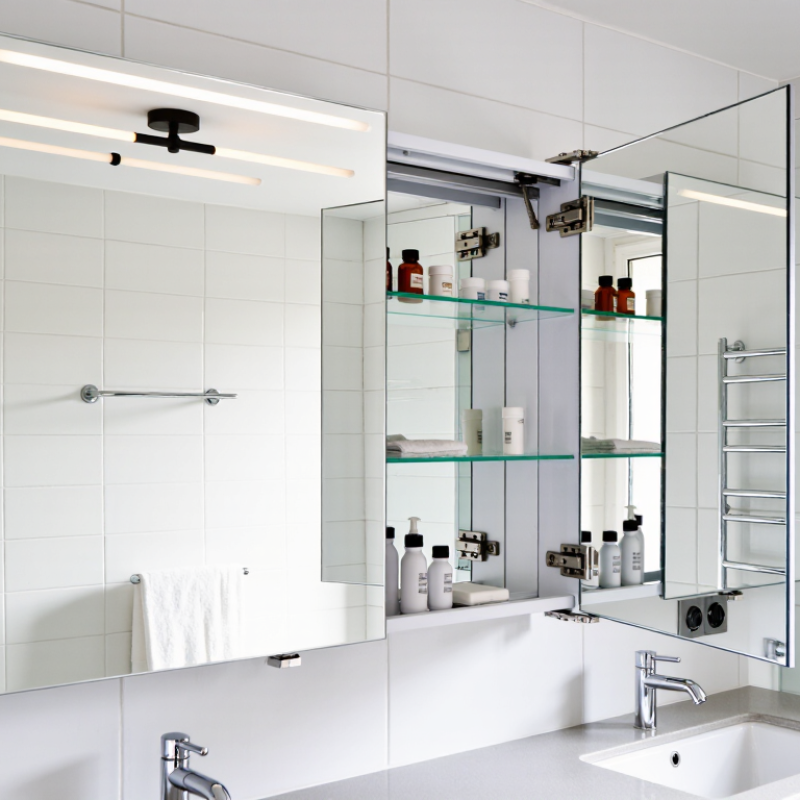
A recessed mirrored medicine cabinet sits inside the wall cavity, creating a cleaner profile than a surface-mounted unit. Its depth depends on the available space between wall studs. Before choosing one, measure the opening carefully, including width, height, and depth. Do not assume every wall has enough room. Plumbing, wiring, and structural supports can limit placement. A small inspection hole can reveal hidden obstacles before cutting begins.
The mirror is only one part of the cabinet. Look for adjustable shelves, rust-resistant materials, soft-close hinges, and suitable lighting if needed. In a humid bathroom, sealed edges and durable finishes matter. The door should open without striking a nearby wall, faucet, or towel bar. For electrical features, use a qualified professional and follow local installation requirements. This protects the cabinet and the people using it. A common mistake is choosing the largest cabinet available, then discovering that the wall cavity cannot support it properly. Measure twice.
Tips: Mark the stud locations first. Leave clearance around the cabinet door. Check shelf height against your daily items, such as bottles, razors, and skincare containers. If the wall is unusually thin, a shallow model may work better. I would also test the mirror height from several standing positions, because a perfect measurement on paper may feel awkward in use. Small details matter.
Choosing a recessed mirrored medicine cabinet starts with the wall, not the mirror. Measure the available width, height, and depth between finished surfaces. Record each measurement twice. Walls are rarely perfectly square.
Use a stud finder to locate framing members and inspect the cavity for plumbing, wiring, insulation, or blocking. A recessed cabinet needs enough internal depth without pressing against hidden services. Never cut into the wall until those areas are confirmed. Local building requirements may also affect electrical clearances and bathroom installation.
Measure from the floor, sink, and nearby light fixtures. Leave comfortable space for opening the door and cleaning the mirror. Compare these measurements with the cabinet’s full dimensions and required rough opening. The rough opening may differ from the visible cabinet size. Check the installation guide carefully.
Keep the cabinet level. Small errors become obvious above a sink. I once measured only the widest part of a wall opening and missed a slight taper near the corner. The cabinet fit, but the trim looked uneven. That mistake reminded me to measure the top, middle, and bottom. A temporary cardboard template can reveal clearance problems before cutting. If the wall contains uncertain wiring or pipes, ask a qualified professional to inspect it. A careful measurement is cheaper than a damaged wall.
Choosing a recessed mirrored medicine cabinet starts with its material, especially in a warm, humid bathroom. Powder-coated steel offers strength and resists daily wear, while aluminum stays lighter and handles moisture well. Moisture-resistant engineered wood can look warmer, but damaged edges may swell over time. I once focused only on the mirror finish. That was a mistake. Inspect the frame, hinges, shelf supports, and wall-facing surfaces before judging appearance.
Storage capacity depends on more than the cabinet’s outside width. Measure the available wall cavity, including plumbing, studs, and electrical routes. A shallow cabinet may suit toiletries, but deeper models hold taller bottles and stacked containers. Adjustable glass shelves make better use of changing storage needs. Door bins are helpful for small items, though heavy bottles can strain hinges. Count what you actually use each morning. Imagined storage is often misleading.
Interior features should support safe, simple routines. Soft-close hinges reduce noise and protect the frame. Integrated lighting can improve visibility, but it should provide even illumination without glare. A built-in outlet may be convenient for grooming tools, provided installation meets local electrical requirements. Some cabinets include mirrored interiors or a magnifying panel; these details are useful, yet they can reduce usable shelf space. I prefer removable shelves because cleaning becomes easier, although loose parts are easier to misplace. Check the door swing, shelf clearance, and mirror alignment in person when possible. Small details matter.
Compare cabinet materials, storage capacity, and interior features before selecting a recessed mirrored medicine cabinet.
Powder-coated steel is rigid and economical, but damaged coatings can expose the steel to moisture. Aluminum is lightweight and naturally corrosion-resistant. Stainless steel offers strong corrosion resistance and durability, although it is typically heavier and more expensive.
The chart uses common nominal cabinet sizes with an approximately 4-inch recessed depth. Usable volume is estimated after allowing space for the frame, door mechanism, shelves, and wall clearance.
Prioritize adjustable glass shelves, a mirrored interior, rust-resistant shelf supports, soft-close hinges, and integrated lighting when visibility and organization are important.
Planning values are approximate and vary with frame thickness, door construction, shelf spacing, and electrical components.
How to Choose a Recessed Mirrored Medicine Cabinet
A recessed mirrored medicine cabinet should match your daily routine, not only your bathroom style. A flat mirror gives a quiet, modern appearance and suits narrow rooms. A three-panel mirror offers wider viewing angles, but it needs more wall clearance. Framed mirrors can add warmth, although thick frames may reduce usable storage space. Measure the wall cavity carefully. Plumbing, wiring, and studs can limit your choices.
Lighting deserves practical attention. Choose even illumination around the face, rather than one harsh light above the cabinet. High color rendering helps you judge skin tones and grooming details more accurately. A warm-to-neutral color range often feels comfortable in bathrooms. Avoid exposed bulbs near water. Electrical work should follow local requirements and use a qualified professional. I once underestimated glare from a bright ceiling light; the mirror looked attractive but was uncomfortable at night.
Safety and accessibility should guide the final decision. Look for sturdy hinges, secure shelves, and moisture-resistant construction. Safety glass is worth considering in busy households. The door should open without striking a nearby wall or user. Install the cabinet where children and seated users can reach essential items when appropriate. Keep frequently used products on lower shelves. Accessibility is not always obvious.
Tips: Mark the proposed cabinet with painter’s tape first. Stand in front of it. Check your reflection, door swing, and reach before cutting the wall. Leave space for future adjustments, because real bathrooms rarely stay perfectly organized.
| Evaluation Area | Option or Recommended Specification | Practical Benefits | Potential Limitations | Selection Check |
|---|---|---|---|---|
| Mirror style | Single mirrored door | Simple appearance, fewer moving parts, and usually the lowest installation complexity. | Provides less viewing coverage when the door is opened. | Choose when a clean front view and compact storage are the main priorities. |
| Mirror style | Double mirrored doors | Offers a wider reflected view and can provide better access to both sides of the cabinet interior. | Requires adequate clearance for two doors and may have more hinge adjustment points. | Confirm that adjacent walls, sconces, and faucets will not obstruct door movement. |
| Mirror style | Tri-view or side-mirror design | Improves visibility from multiple angles for grooming, hair styling, and shaving. | Projects farther into the room when opened and typically needs additional wall clearance. | Measure the full open-door projection, not only the recessed box width. |
| Mirror quality | Flat, distortion-resistant glass mirror | Produces a more accurate reflection and reduces visual warping across the mirror surface. | Higher-quality glass and protective backing may increase cost. | Inspect the reflection from several angles before installation. |
| Lighting | Integrated LED lighting, approximately 90–100 CRI | Provides efficient illumination and better color recognition for makeup, skincare, and grooming. | Requires electrical planning and may need a qualified electrician. | Verify the listed color-rendering index, power requirements, and dimmer compatibility. |
| Lighting | Neutral-white color temperature, about 3,000–4,000 K | Balances a comfortable appearance with useful task lighting in most bathrooms. | Very cool light can feel harsh, while very warm light may reduce color accuracy. | Select a color temperature that coordinates with the room’s existing fixtures. |
| Lighting control | Dimmable touch, rocker, or wall control | Allows brighter task lighting and softer nighttime illumination. | Some controls may be incompatible with the LED driver or household wiring. | Confirm compatibility before purchasing and place controls where they are easy to reach. |
| Safety glass | Tempered or safety-rated mirror glass | Tempered glass is designed to break into smaller, less knife-like pieces than ordinary annealed glass. | It can still break if severely impacted and normally cannot be cut after tempering. | Check the product safety documentation and follow local building requirements. |
| Moisture protection | Corrosion-resistant cabinet body and sealed electrical components | Helps the cabinet withstand bathroom humidity and reduces premature corrosion. | A moisture-resistant cabinet is not automatically waterproof or suitable for direct water exposure. | Keep the cabinet outside prohibited wet locations unless it is specifically rated for that location. |
| Electrical safety | Grounded wiring, suitable protection, and installation by a qualified professional | Reduces shock, overheating, and wiring risks in a humid environment. | Local electrical rules vary by bathroom zones and installation conditions. | Use the installation instructions and confirm requirements with a licensed electrician. |
| Storage configuration | Adjustable glass shelves with approximately 2–3 height positions | Accommodates bottles of different heights and makes cleaning easier. | Glass shelves have a specified load limit and may chip if dropped or overloaded. | Check shelf load capacity and leave clearance around frequently used items. |
| Accessibility | Mount frequently used storage and controls within comfortable seated and standing reach | Improves usability for children, wheelchair users, and people with limited reach or balance. | A lower mounting position may reduce the available mirror height or conflict with the faucet. | For accessibility projects, verify reach ranges and mounting heights against applicable local standards. |
| Door operation | Soft-close hinges with handles or easy-grip edges | Reduces slamming and makes opening easier for users with limited hand strength. | Hinges require correct alignment, and soft-close mechanisms can add resistance. | Test the opening force and ensure the door does not collide with nearby fixtures. |
| Installation fit | Cabinet dimensions matched to the wall cavity, studs, and plumbing | Supports a secure installation and avoids cutting into structural, electrical, or plumbing components. | A recessed installation may require framing changes or a surface-mounted alternative. | Verify cavity width, height, depth, stud locations, wiring, pipes, and door swing before cutting the wall. |
Note: Installation, electrical, accessibility, and wet-location requirements vary by jurisdiction. Always follow the product instructions and applicable local codes.
Choosing a recessed mirrored medicine cabinet begins with your bathroom’s structure and budget. Measure the wall cavity, stud spacing, door swing, and nearby plumbing before shopping. A cabinet may look slim, yet its box can require four inches of clear depth. Confirm the wall is non-load-bearing, or ask a qualified contractor to inspect it. Moisture-resistant interiors matter in steamy bathrooms. So does adjustable shelving. Small shelves often waste usable height.
Budget for more than the cabinet itself. Installation may involve drywall repair, framing, electrical work, and tile replacement. The 2024 NKBA Bath Design Trends report identifies storage and layered lighting as continuing bathroom priorities. That supports choosing mirrored doors with integrated illumination, but only when the electrical cost fits. ENERGY STAR reports that certified LED lighting uses at least 75% less energy and lasts up to 25 times longer than incandescent lighting. Check color temperature carefully. Very cool light can make skin tones appear harsh.
Design should follow daily habits, not only photographs. A shallow cabinet suits a narrow wall, while a wider unit can reduce counter clutter for two users. Reversible doors and soft-close hinges improve practical use. For accessibility, review mounting height and door reach with a professional. The 2024 Houzz U.S. Bathroom Trends Study shows homeowners continue investing in functional storage during renovations. Still, premium features can consume the budget quickly. I would leave a contingency of 10% to 15%. Real walls rarely behave perfectly.
Measure the wall width, height, and depth between finished surfaces. Check the top, middle, and bottom. Walls can taper slightly. Record every measurement twice.
The rough opening may differ from the cabinet’s visible dimensions. Compare both sizes with the installation guide. A cardboard template can expose clearance problems before cutting.
Locate studs and check for pipes, wiring, insulation, and blocking. Do not cut until the cavity is confirmed clear. Hidden services can turn a simple project into expensive damage.
Measure from the floor, sink, and nearby lights. Leave room for the door to open and the mirror to be cleaned. A level cabinet looks better above a sink.
Powder-coated steel is strong and resists daily wear. Aluminum is lighter and handles moisture well. Engineered wood can look warmer, but damaged edges may swell.
Count the toiletries you use each morning. Measure tall bottles, stacked containers, and available shelf depth. Imagined storage is often misleading.
Adjustable glass shelves adapt when storage needs change. Door bins hold small items, but heavy bottles may strain the hinges. I once valued appearance too much. That was a poor choice.
Soft-close hinges reduce noise and protect the frame. Even lighting improves visibility without harsh glare. A built-in outlet may help, but electrical installation must follow local requirements. Check shelf clearance and mirror alignment in person when possible.
Choosing a Mirrored Medicine Cabinet Recessed can improve both the appearance and functionality of a bathroom. Begin by understanding how recessed cabinets fit inside the wall, then measure the available space carefully, including wall depth, framing, plumbing, and electrical requirements. Accurate measurements help prevent installation problems and ensure that doors can open comfortably without interfering with nearby fixtures.
Next, compare cabinet materials, construction quality, storage capacity, and interior features such as adjustable shelves, compartments, and easy-clean surfaces. Consider whether you prefer a single mirror, multiple panels, magnifying sections, or integrated lighting. Safety features, moisture resistance, soft-close hinges, and accessible shelf heights can also make daily use more convenient. Finally, select a style that complements your bathroom design while matching your budget and long-term maintenance expectations. A well-chosen recessed mirrored cabinet should provide reliable storage, clear reflection, practical illumination, and a clean, space-saving appearance.