
How to Choose the Right Flammable Cabinet?

Time:2026-09-09 Author:Madeline
0%

Choosing the right Flammable Cabinet is a practical safety decision, not a simple purchasing task. The cabinet must match the chemicals, workplace conditions, storage volume, and daily handling habits. A small laboratory may need a compact, self-closing cabinet. A busy maintenance area may require stronger shelves, larger capacity, and easier access.

Dr. James A. Kaufman, a chemical safety educator and founder of the Laboratory Safety Institute, has emphasized a useful principle: “Safety depends on controlling hazards before they become emergencies.” That idea matters here. A Flammable Cabinet should reduce exposure to heat, sparks, spills, and unnecessary handling. Look for clear labeling, adjustable shelves, leak-resistant construction, and secure doors. Check the cabinet’s listed capacity carefully. Bigger is not always better.

Ask practical questions. Will containers stand upright? Can workers read labels without removing every bottle? Is the cabinet placed away from exits, ignition sources, and direct sunlight? These details often reveal weak planning. A cabinet can be technically suitable yet poorly positioned. That is an uncomfortable point.

Do not choose only by price. Review the manufacturer’s specifications, installation guidance, and maintenance requirements. Confirm that the design suits your workplace and the substances stored there. Local safety requirements may also differ, so qualified professionals should verify the final selection. This guide explains the main choices clearly, while acknowledging one imperfect truth: safe storage depends on people using the cabinet correctly every day.
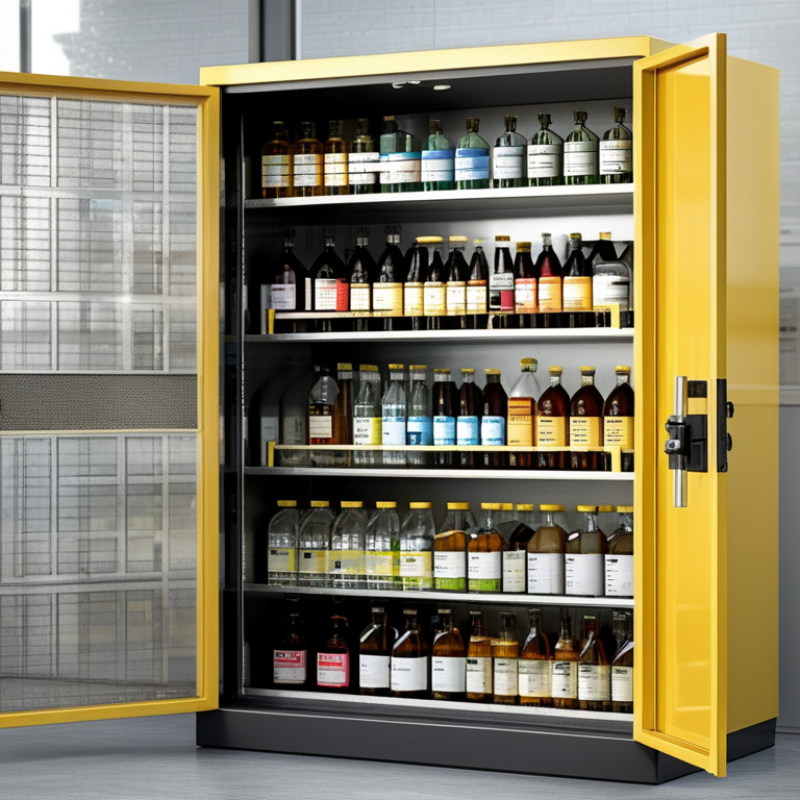
How to Choose the Right Flammable Cabinet?

Identify the Flammable Materials and Storage Risks

How to Choose the Right Flammable Cabinet?

Identify the Flammable Materials and Storage Risks

Choosing a flammable cabinet starts with identifying the materials, not selecting the largest cabinet available. Read every safety data sheet and record each liquid’s flash point, storage class, quantity, and container type. A solvent with a 20°C flash point creates a different hazard from one with a 90°C flash point. Vapors may travel toward ignition sources, even when containers appear tightly closed.

The National Fire Protection Association reported 1,504,500 fires in the United States during 2022, causing about $18.1 billion in property damage. That figure covers many fire types, but it shows why small storage decisions deserve careful attention. OSHA’s flammable-liquid rules and NFPA 30 provide practical controls for cabinet construction, container limits, ventilation, and separation. Requirements can vary by jurisdiction, so a qualified safety professional should verify the final arrangement.

Check the room, too. Heat-producing equipment, electrical panels, doorways, drains, and busy work routes can increase risk. Keep incompatible chemicals apart, and avoid storing waste containers beside fresh stock. A cabinet should not become a crowded mini-warehouse. Leave usable space for inspection and spill response. It is easy to count containers and miss vapor movement, damaged caps, or changing inventory. No checklist catches everything. Revisit the assessment after new chemicals, processes, or quantities appear.

Understand Flammable Cabinet Safety Standards and Requirements

How to Choose the Right Flammable Cabinet?

Choosing a flammable cabinet begins with safety standards, not color or capacity. In the United States, OSHA 29 CFR 1910.106 limits cabinet storage to 60 gallons of Class I or II liquids, or 120 gallons of Class III liquids. It also permits no more than three cabinets in one storage area. NFPA 30 provides broader guidance on liquid classification, cabinet design, separation, and facility layout. Always match the cabinet to the classification system used at your site.

Look closely at construction details. OSHA requires steel cabinets with double walls and an approximately 1.5-inch air space, or approved wooden construction. Doors should close securely, and the bottom should include a liquid-tight sill. A raised edge matters. Small leaks spread quickly across smooth floors. NFPA’s 2023 industrial and manufacturing fire report recorded an average of 37,910 structure fires annually from 2017 to 2021, with about $1.2 billion in direct property damage each year. That figure is sobering.

A label alone is not enough. Check self-closing doors, adjustable shelves, warning signs, and compatibility with the stored liquids. Do not assume a larger cabinet is safer. Oversized storage can encourage poor segregation and overloading. Vent connections also require careful review; improper ventilation may create a hazard instead of reducing one. Selection mistakes are often quiet. Recheck the cabinet against the Safety Data Sheets, local fire-code requirements, and the manufacturer’s tested specifications before purchase.

Choose the Correct Cabinet Size, Capacity, and Construction

Choosing the correct flammable cabinet starts with size, not appearance. Measure the available floor space, door swing, and nearby walkways. Leave enough clearance to open containers without awkward reaching. A cabinet that fits tightly may create daily handling problems.

Capacity should match both current stock and realistic growth. Check each container’s volume, then calculate the total amount stored inside. Do not fill every shelf to its limit. Shelves need room for stable placement and leak control. Small bottles can consume more space than expected. This is where planning often fails. A slightly larger cabinet may support safer organization, while an oversized cabinet can encourage unnecessary storage. Review the safety data sheets before choosing the cabinet’s capacity and internal layout.

Construction affects fire resistance and durability. Look for tested, double-wall steel construction with an insulating air gap, adjustable shelves, and a built-in spill containment sump. Self-closing doors and secure latching hardware can reduce exposure during an incident. Shelf supports should handle the full container load without bending. Check the cabinet’s certification and installation requirements from a qualified safety professional or local authority. Grounding may be necessary during dispensing, but it should be assessed for the specific setup. A cabinet is not a substitute for good housekeeping. Keep incompatible materials separated, inspect containers regularly, and replace damaged shelves or door seals promptly.

Compare Cabinet Features for Safe and Practical Use

Choosing the right flammable cabinet means comparing features, not simply counting litres. I once treated capacity as the main criterion. That was a poor shortcut.

A practical cabinet should have double-wall steel construction, a raised leak-resistant sill, and adjustable shelves. Shelves must remain stable under the expected load. Doors should close securely and latch without force. Self-closing doors can reduce exposure when staff are distracted. A clear warning label also matters near busy workstations.

NFPA’s Fire Loss in the United States During 2023 report recorded about 1.5 million fires and 3,790 civilian deaths. That data does not measure cabinet failures directly. It does show why small storage decisions deserve serious attention. OSHA 29 CFR 1910.106 also addresses approved storage cabinets and quantity limits for flammable liquids. Check the applicable workplace requirements before purchasing.

Compare the cabinet’s footprint with its location. A narrow unit may fit beside a bench, but its shelves can become difficult to reach. A larger unit may waste space and encourage overstocking. Confirm the load rating, shelf adjustability, spill capacity, and grounding options where required by the site assessment. Venting deserves careful review; it is not automatically safer. Unplanned connections can create another hazard. Read the safety data sheets, separate incompatible materials, and keep containers upright. Door color is useful, but it is not a safety feature by itself. Staff training remains easy to underestimate.

How to Choose the Right Flammable Cabinet?

Compare cabinet capacity limits and select a cabinet that matches the liquid class, storage volume, and applicable local fire-code requirements.

U.S. OSHA 29 CFR 1910.106 permits up to 60 gallons of Class I and Class II liquids, up to 120 gallons of Class III liquids, and no more than 3 gallons of Class IA liquids in one cabinet. Always verify local regulations before purchase or installation.

Plan Proper Cabinet Placement, Organization, and Maintenance

Choosing the right flammable cabinet begins with its location, not its color or capacity. Place it on stable, level flooring, away from exits, heat sources, sparks, and direct sunlight. Keep doors fully accessible, with enough clearance for safe opening and inspection. Do not hide the cabinet behind equipment or store it beside ignition-prone machinery. A nearby spill-control kit and suitable fire extinguisher should remain visible without blocking an exit route. This detail is easy to overlook.

Organization reduces handling errors. Store compatible liquids together, and separate incompatible substances according to their safety data sheets. Use shelves for modest, stable loads; heavy containers belong low. Keep every container closed, upright, labeled, and free from residue. Do not use the cabinet as a general chemical cupboard. Empty space matters. It limits falling containers and makes leaks easier to spot. A simple inventory sheet can record product name, quantity, receipt date, and condition. Review it monthly, even when nothing seems wrong.

Maintenance should be routine, documented, and slightly skeptical. Inspect hinges, latches, seals, shelves, and the cabinet floor for corrosion or damage. Check that labels remain readable and warning signs remain visible. Remove damaged containers through an approved workplace procedure. Never repair a compromised cabinet with improvised materials. A signed checklist means little if nobody opens the door. Train users on access rules, spill response, and emergency contacts. Recheck placement after renovations, new equipment, or storage changes. Ask whether the cabinet still fits the real workflow. Sometimes it does not.

How to Choose the Right Flammable Cabinet? - Plan Proper Cabinet Placement, Organization, and Maintenance
Planning Area Decision Criterion Recommended Practice Verification Point
Cabinet Selection Identify the stored materials Start with the Safety Data Sheet
Review each product's hazard classification, flash point, incompatibilities, storage temperature, and container requirements before selecting a cabinet.
The cabinet is suitable for the actual liquids and containers being stored.
Cabinet Selection Determine capacity Choose a cabinet that accommodates current inventory while leaving practical room for safe handling. Avoid filling shelves so tightly that containers cannot be removed without damage. Containers are stable, visible, and easy to retrieve without stacking hazards.
Cabinet Selection Confirm construction and certification Select a purpose-built flammable-liquid cabinet with robust steel construction, self-closing doors, leak-containment shelves or a bottom sump, and applicable regulatory or testing documentation. The product documentation matches the requirements of the workplace and local authority.
Cabinet Selection Choose door configuration Use a door style that does not obstruct aisles, emergency equipment, or other work areas. Ensure doors close and latch properly after every use. Doors can open fully and close automatically without interference.
Cabinet Selection Separate incompatible substances Do not use one cabinet as a general-purpose chemical cabinet. Keep oxidizers, corrosives, reactive materials, and other incompatible substances in storage designed for their specific hazards. The inventory has been reviewed for incompatibilities before placement.
Placement Keep away from ignition sources Position the cabinet away from flames, sparks, hot surfaces, welding areas, electrical arcing, and other ignition sources. Minimize the distance that flammable containers must be carried. No routine ignition source is located beside or directly above the cabinet.
Placement Maintain access and egress Place the cabinet where it does not block exits, stairways, fire extinguishers, emergency showers, eyewash stations, electrical panels, or designated walkways. Required emergency routes and equipment remain unobstructed at all times.
Placement Select a stable surface Install the cabinet on a level, load-bearing surface. Secure it when required by the manufacturer's instructions, site risk assessment, or local regulations, especially in areas exposed to impact or seismic movement. The cabinet is level, stable, undamaged, and protected from vehicle or equipment impact.
Placement Consider ventilation carefully Follow the cabinet manufacturer's instructions and applicable regulations before connecting any ventilation system. Do not modify the cabinet or remove vents without competent technical review. Any ventilation arrangement has been evaluated for fire, vapor, and performance risks.
Organization Keep containers closed Store liquids in approved, compatible containers with tight-fitting closures. Keep containers closed except when dispensing or transferring material. No open, leaking, bulging, or damaged containers are present.
Organization Use shelves correctly Distribute weight evenly and keep heavier containers on lower shelves. Do not exceed shelf load limits, block the cabinet's spill-retention area, or allow containers to overhang. Shelf capacity is respected and the cabinet remains balanced.
Organization Control container size and handling Store containers that can be handled safely by the users. Use secondary containment where appropriate, particularly for fragile containers or liquids with a high consequence of release. Containers can be lifted and removed without excessive force or awkward movement.
Organization Label contents clearly Keep original labels legible and ensure workplace labels identify the material, relevant hazards, and required precautions. Maintain an up-to-date inventory near the cabinet or in the approved electronic system. Every container can be identified without opening it.
Organization Manage quantities Store only the quantity needed for operational activities. Return excess material to approved storage and dispose of unwanted chemicals through the site's hazardous-waste process. Stored quantities are reviewed against workplace needs and applicable limits.
Maintenance Perform routine inspections Inspect the cabinet at a defined frequency and after any spill, impact, fire, or abnormal event. Check doors, latches, hinges, shelves, seams, labels, and the containment area. Inspection findings and corrective actions are documented.
Maintenance Remove spills promptly Isolate the area, follow the product Safety Data Sheet and site spill plan, use suitable personal protective equipment, and place contaminated absorbents in approved waste containers. Spills are handled by trained personnel using compatible cleanup materials.
Maintenance Check corrosion and damage Look for rust, chemical attack, dents, distorted doors, damaged seals, loose hardware, or compromised shelves. Remove the cabinet from service if its protective function may be affected. Damaged components are repaired or replaced before continued use.
Maintenance Maintain housekeeping Keep the top, sides, floor, and surrounding area free from combustible waste, unnecessary equipment, and containers awaiting disposal. Do not use the cabinet as a general storage surface. The surrounding area is clean, accessible, and free of unrelated materials.
Training Train authorized users Train personnel on hazard communication, cabinet capacity, container handling, spill response, ignition-source control, emergency procedures, and waste management. Training records are current and users know how to report defects or spills.
Review Reassess after process changes Reevaluate cabinet type, location, capacity, and inventory when materials, processes, room layouts, ventilation, or regulatory requirements change. The storage plan reflects current operations and site-specific risk controls.

FAQS

: How do I choose the correct flammable cabinet?

: Identify each liquid before choosing cabinet size. Read its safety data sheet. Record the flash point, storage class, quantity, and container type. A cabinet should match the actual hazard, not the largest available capacity.

Why does the flash point matter?

A liquid with a 20°C flash point can create greater vapor risk than one at 90°C. Vapors may travel toward heat, sparks, or electrical equipment. Closed containers still need careful placement. Small details matter.

What storage limits should I check?

Some workplace guidance limits storage to 60 gallons of Class I or II liquids. Class III liquid limits may reach 120 gallons. Certain areas may allow no more than three cabinets. Confirm current local requirements before buying.

What construction features should a cabinet have?

Look for double steel walls with an air gap of about 1.5 inches. The doors should close securely. A liquid-tight raised sill helps contain spills. Adjustable shelves, warning labels, and self-closing doors are useful features.

Where should the cabinet be placed?

Use stable, level flooring away from exits, heat, sparks, and direct sunlight. Keep the doors fully accessible. Do not place the cabinet behind equipment or beside ignition-prone machinery. Keep spill supplies visible without blocking escape routes.

How should containers be organized inside?

Store compatible liquids together. Separate incompatible substances using their safety data sheets. Keep containers upright, closed, labeled, and clean. Place heavy containers on lower shelves. Leave empty space for inspection and leak control.

How often should the cabinet be inspected?

Review the inventory monthly, even when everything appears normal. Inspect hinges, latches, seals, shelves, labels, and the cabinet floor. Remove damaged containers through an approved workplace procedure. Never use improvised repairs.

Can ventilation connections make the cabinet safer?

Not automatically. Improper ventilation may create additional hazards. Review ventilation needs against the liquid classification and tested cabinet specifications. A qualified safety professional should verify the final arrangement. Recheck the decision after changes.

Conclusion

Choosing the right Flammable Cabinet begins with identifying the materials to be stored, their ignition risks, container types, and expected storage volume. Consider the cabinet’s capacity, dimensions, construction, fire resistance, ventilation design, shelving strength, and compatibility with the substances involved. Reviewing recognized safety standards and applicable workplace requirements can help ensure the cabinet provides suitable protection while supporting safe daily operations.

A practical Flammable Cabinet should also offer features such as secure doors, spill containment, clear labeling, adjustable shelves, and easy access without creating unnecessary exposure risks. Placement is equally important: position the cabinet in a cool, stable, well-organized area away from ignition sources, traffic routes, and incompatible materials. Store containers upright, keep the cabinet uncluttered, inspect it regularly, and remove damaged or expired containers according to approved procedures. Careful selection, organization, and maintenance can reduce fire hazards and promote a safer, more efficient workplace.

Madeline

Madeline

Madeline is a dedicated marketing professional with a wealth of expertise in our company's core offerings. With a keen understanding of the industry, she brings a unique perspective to her role, consistently delivering high-quality content that highlights the superior aspects of our products. As......